For Authorizers & Application Evaluators
CharterRead.ai
To meet customer demand, we've created CharterRead.ai, the evidence-grounded AI charter application evaluation solution. You submit your application rubric and charter applications and our platform generates in-depth analyses of each application.
How It Works
Submit Your Rubric
We load your authorizing office's own published application rubric, so every evaluation is scored against your standards.
Upload Applications
Full charter applications with attachments, hundreds of pages at a time. Every page is read; nothing is sampled or excerpted.
Get In-Depth Analyses
Question-by-question findings with page citations, capacity-interview questions built from the gaps, and recommendations for the review team.
Why Not Just Paste the Application into ChatGPT or Claude?
The short answer: our system is much better at giving the same results on Tuesday as on Wednesday, because there is a system through which the analyses are processed. Here's the more detailed answer.
CharterRead.ai reads the whole application. Every page, every question.
A charter application and its attachments run hundreds of pages. Anyone using ChatGPT, Claude, or any general-purpose chatbot is pasting excerpts and reviewing what they pasted.
CharterRead.ai scores against your rubric, not a general idea of a good school.
We load the authorizer's own published rubric and evaluate question by question against it. A general-purpose chatbot evaluates against its impression of quality. This holds for ChatGPT, Claude, and Gemini alike, even in advanced use.
Every rating points to the page it came from.
Each finding cites the page in the application it's based on, so a disagreement takes seconds to settle. A chatbot either gives no citation or invents one, and an authorizer who gets burned once by a fabricated citation never trusts it again.
The gaps become the interview questions.
CharterRead.ai generates capacity-interview questions from the specific weaknesses it found in an application, not from a standard bank.
Your documents stay yours.
Pre-release applications don't go into a consumer chatbot's history. Materials sit in the authorizer's own workspace, we have a data processing agreement developed with an education partner, exports are redacted so they can go to a board, and our AI provider's terms prohibit training on the content.
See a Real Evaluation
From an actual charter application evaluation, shown in the redacted view with the school's and all individuals' names removed.
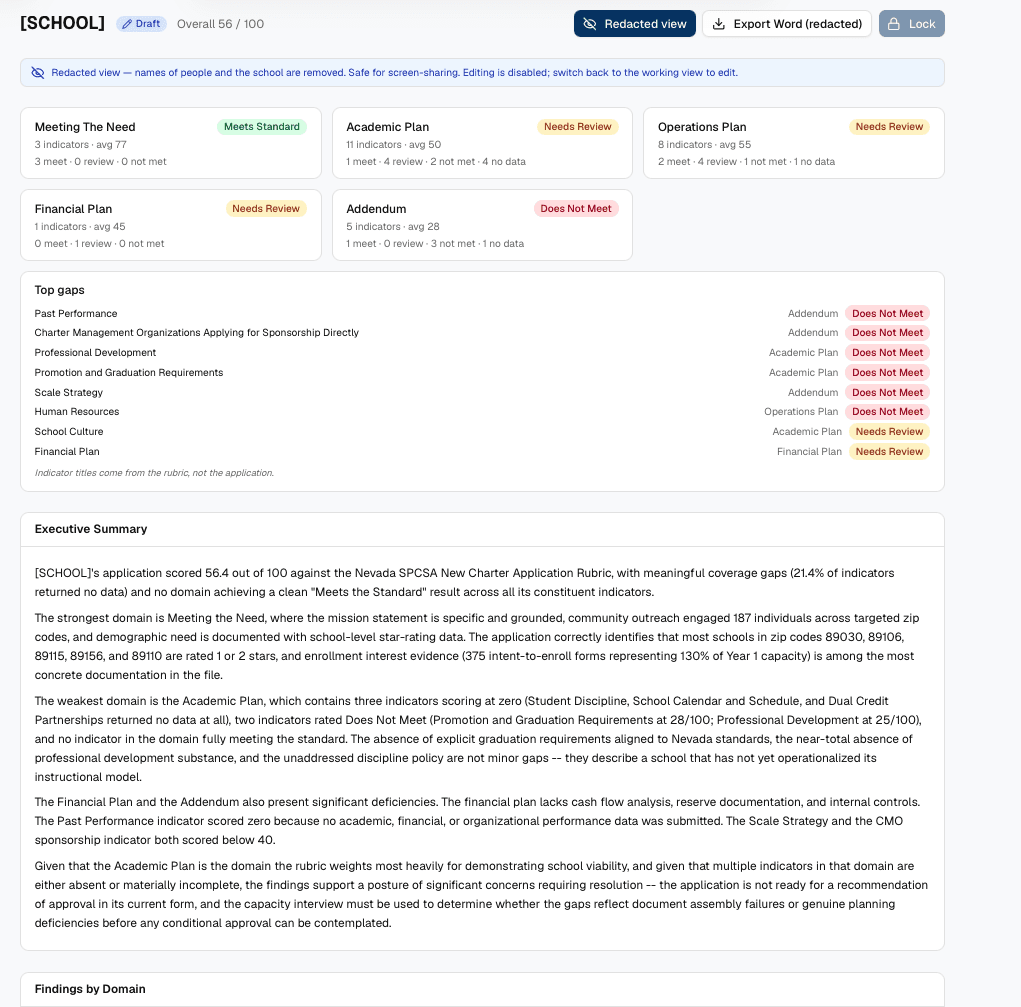
One evaluation, the whole picture
Domain-by-domain scoring against your rubric, the top gaps ranked, and an executive summary a review team can take straight into deliberation. The redacted view removes names of people and the school, so it's safe to share.
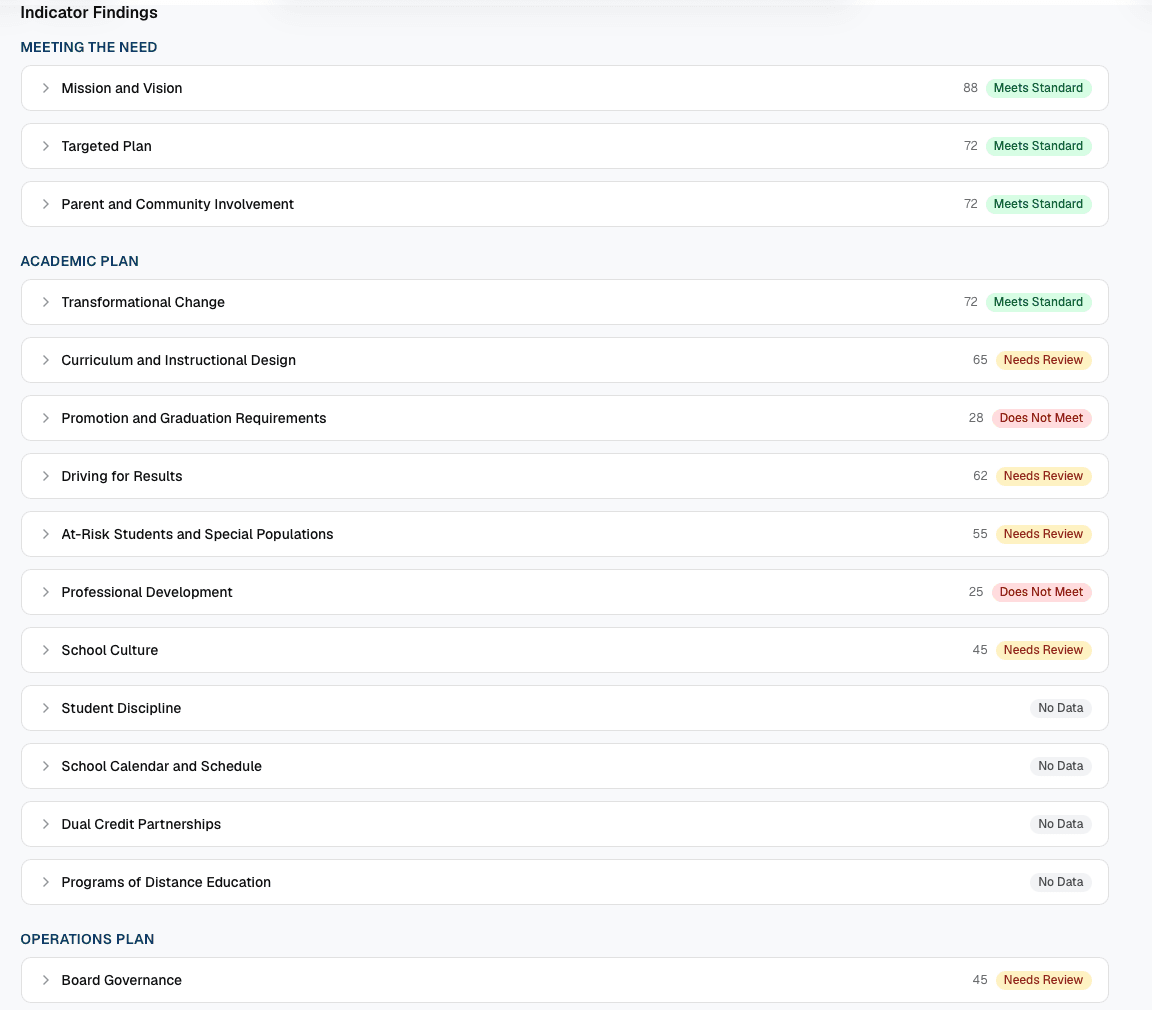
Question by question, against your rubric
Every rubric indicator gets its own finding and status. Sections the application never addressed are marked No Data instead of being quietly skipped, so omissions are visible at a glance.
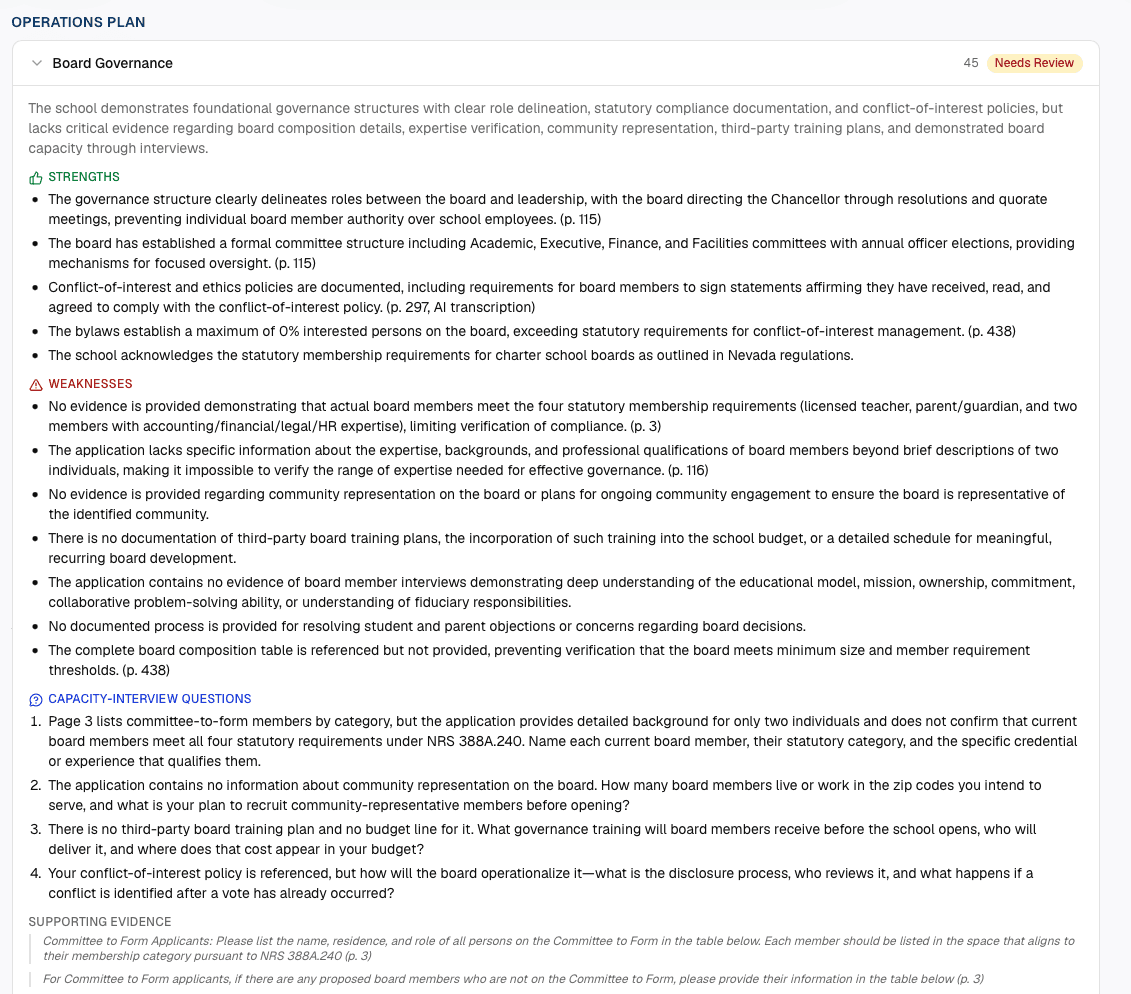
Strengths, weaknesses, and the questions to ask
Each finding lays out strengths and weaknesses with page citations, then turns the specific gaps into capacity-interview questions your team can use as written.
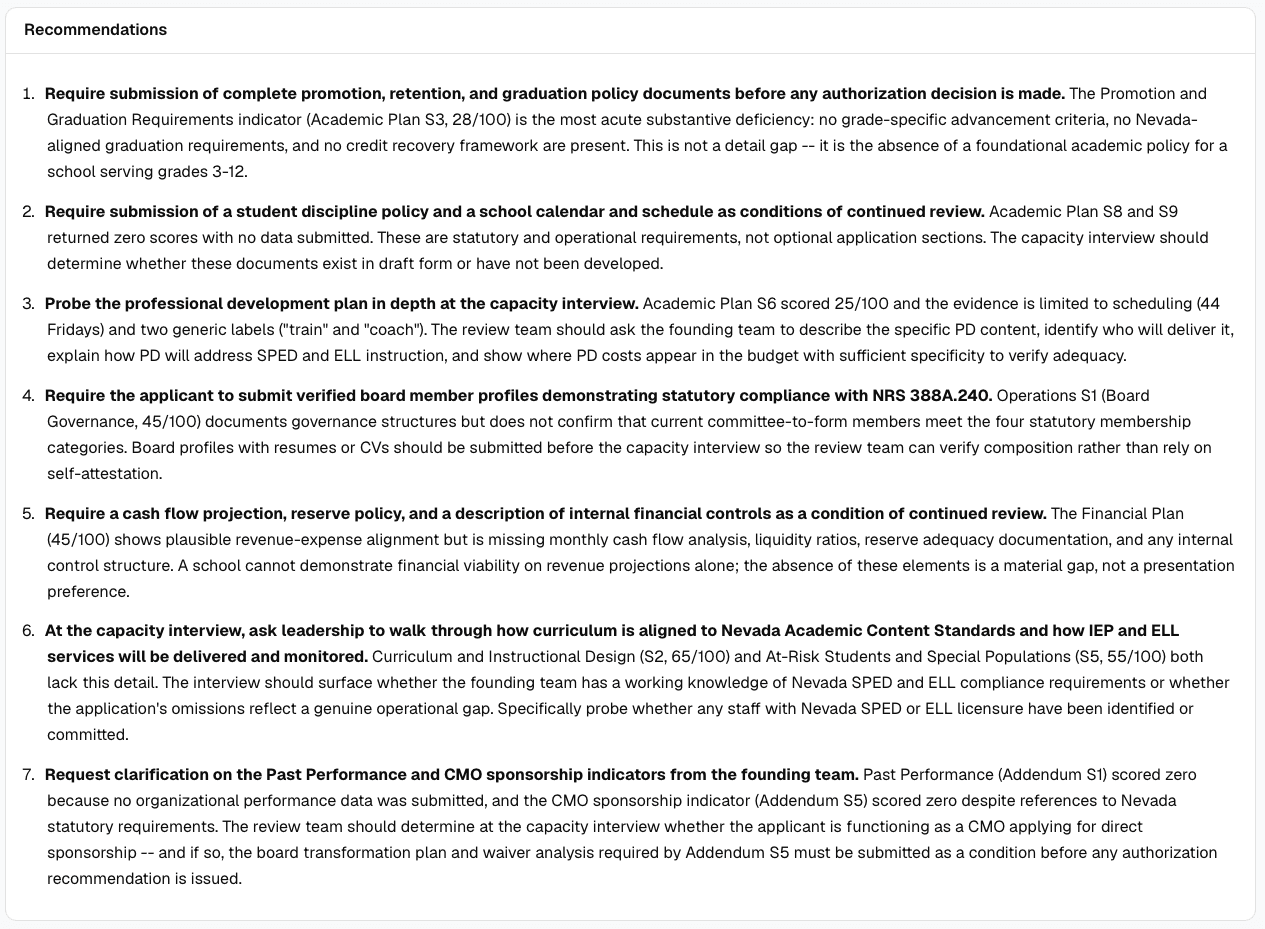
Recommendations your team can act on
The evaluation closes with concrete recommendations: what to require before a decision, what to probe at the capacity interview, and where the application needs clarification.
Pricing
$299 per application
+ $999 one-time customization/setup fee, which covers loading and calibrating your authorizing office's rubric.
Also Evaluating Existing Schools?
CharterRead.ai is built by the team behind SchoolQualityReview.ai, which authorizers use for desk audits and annual site-visit preparation across 82 research-based indicators.
See how SchoolQualityReview.ai works →